Fresh air is essential for a healthier lifestyle. Amaryllis combines innovative engineering with premium ventilation technology to remove stale air, control humidity, and improve indoor air quality, creating cleaner, fresher, and more comfortable spaces every day.
Building Healthier Spaces Through Smarter Ventilation
As indoor environments become more airtight, proper ventilation has become essential. Amaryllis is committed to delivering advanced ventilation solutions that enhance air quality, improve comfort, and create safer, healthier spaces for homes, offices, and commercial environments.
1. What is ventilation?
Ventilation is the process of replacing stale indoor air with fresh outdoor air. It helps remove heat, humidity, odors, dust, and airborne pollutants while maintaining a healthier and more comfortable indoor environment. Proper ventilation also improves indoor air quality and overall well-being.
2. What are indoor air pollutants?
Indoor air pollutants are harmful particles and gases that build up inside enclosed spaces. These include dust, smoke, cooking fumes, excess moisture, volatile organic compounds (VOCs), bacteria, mold spores, and unpleasant odors. Without proper ventilation, these pollutants can reduce indoor air quality and affect comfort and health.
3. Why is proper ventilation important?
Modern buildings are designed to be more airtight, which can trap stale air, humidity, and pollutants indoors. Proper ventilation continuously removes contaminated air and supplies fresh air, helping to reduce moisture, improve comfort, protect interiors from mold, and create a healthier living and working environment.
4. Can an air conditioner replace ventilation?
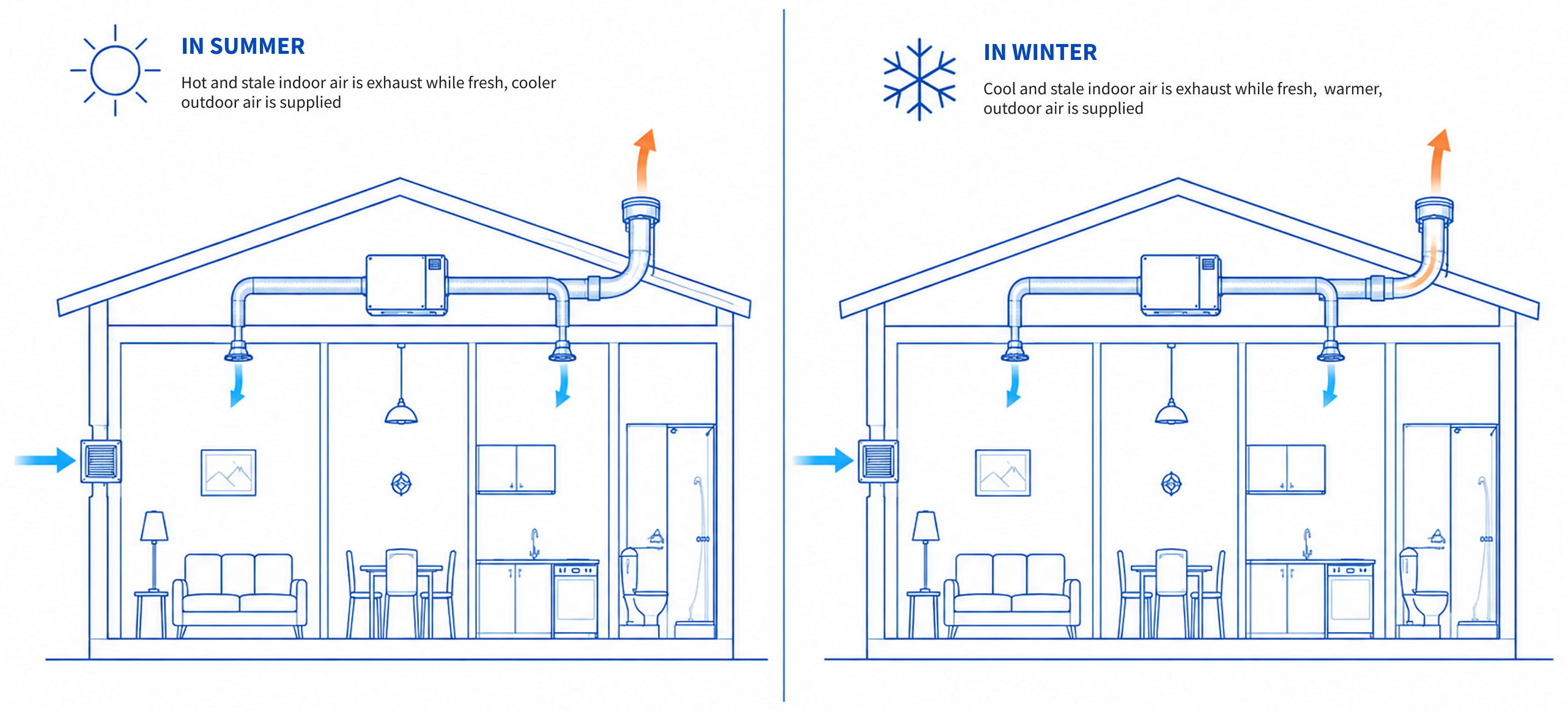
No. An air conditioner mainly cools or heats the air already inside a room. It does not continuously introduce fresh outdoor air or remove indoor pollutants. A dedicated ventilation system works alongside your AC to maintain fresh, clean, and healthy indoor air.
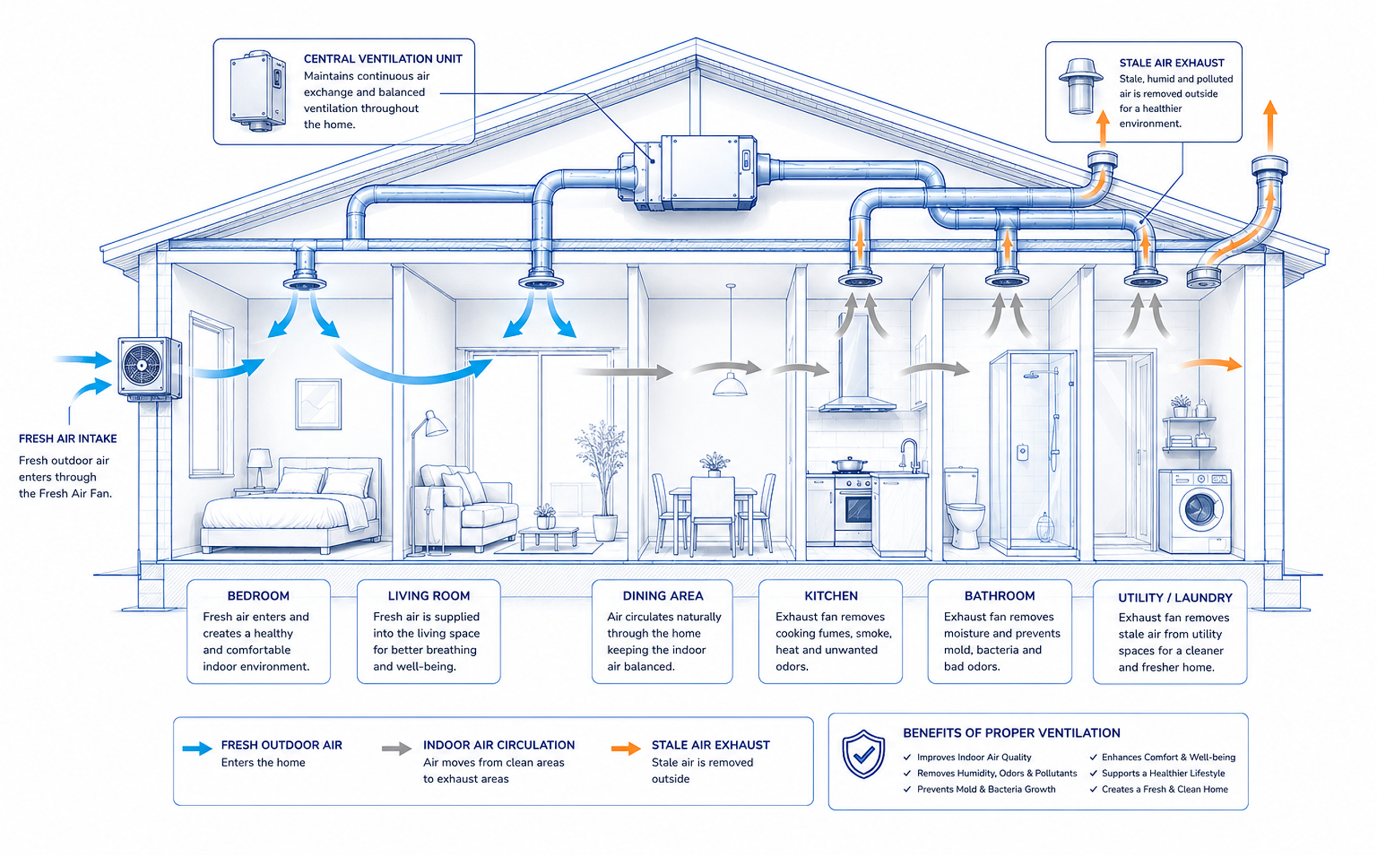
5. How air ventilation work?
How can I improve ventilation in my home?
Creating a healthier indoor environment is simple with the right ventilation practices:
1. Keep Fresh Air Moving Every Day
Proper ventilation is essential for maintaining a healthy and comfortable indoor environment. A continuous airflow system allows fresh outdoor air to enter your home while removing stale indoor air filled with humidity, odors, dust, and airborne pollutants. As fresh air circulates through living spaces, it naturally pushes contaminated air toward kitchens, bathrooms, and utility areas, where exhaust fans efficiently remove it from the building. This balanced exchange of air helps improve indoor air quality, reduce moisture buildup, prevent mold growth, and create a fresher, healthier, and more comfortable space for everyday living. For the best performance, ensure your ventilation system operates regularly and that air vents remain clean and unobstructed.
2. Open Windows to Create Natural Cross Ventilation
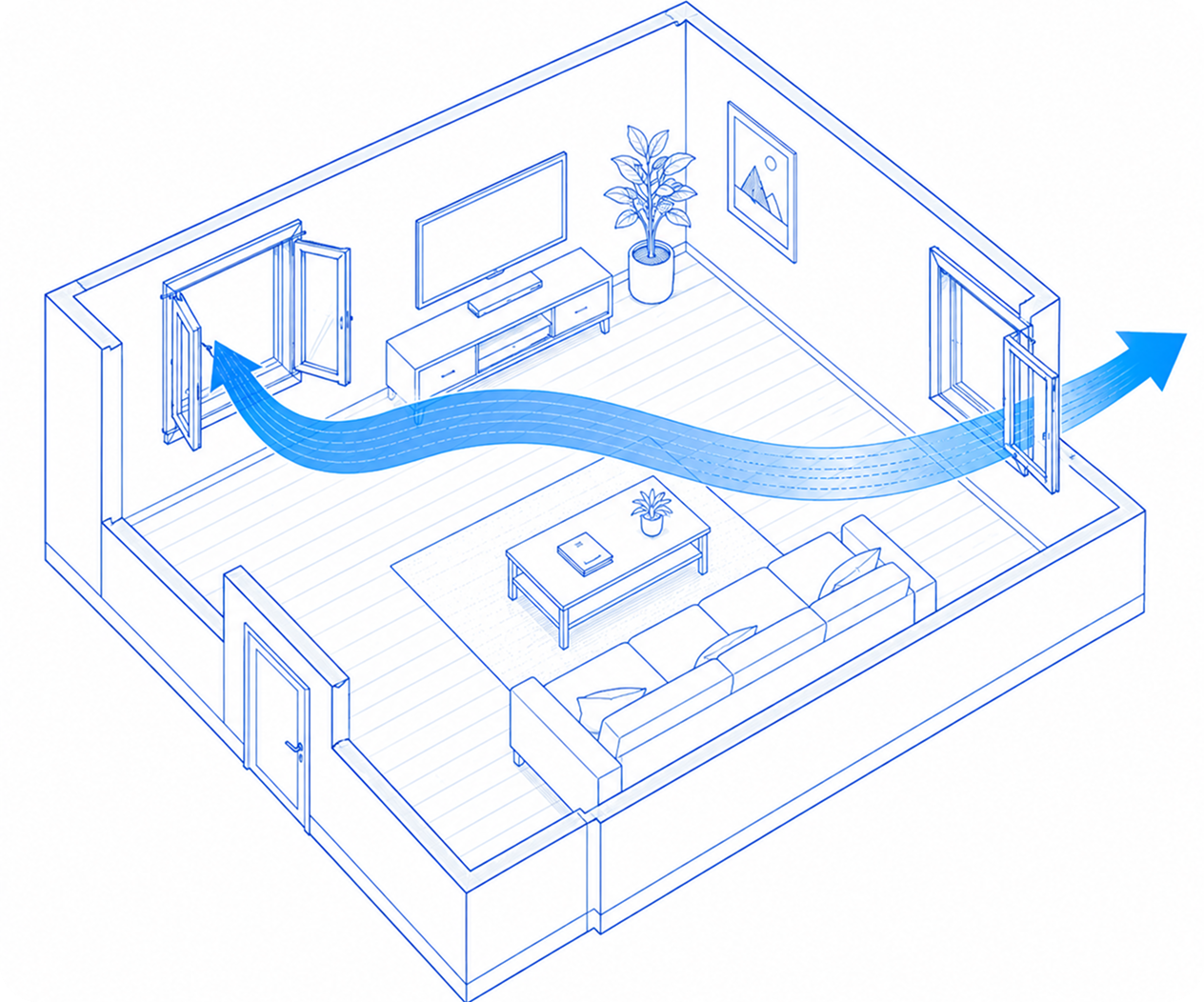
Opening windows is one of the simplest ways to improve indoor air quality. For the best results, open windows on opposite or diagonal sides of your home to create a natural cross-ventilation pathway. This allows fresh outdoor air to enter from one side while stale indoor air exits through the other, improving airflow throughout the entire space. Even opening windows for 10–15 minutes, two or three times a day, can help reduce humidity, remove odors, and refresh indoor air.
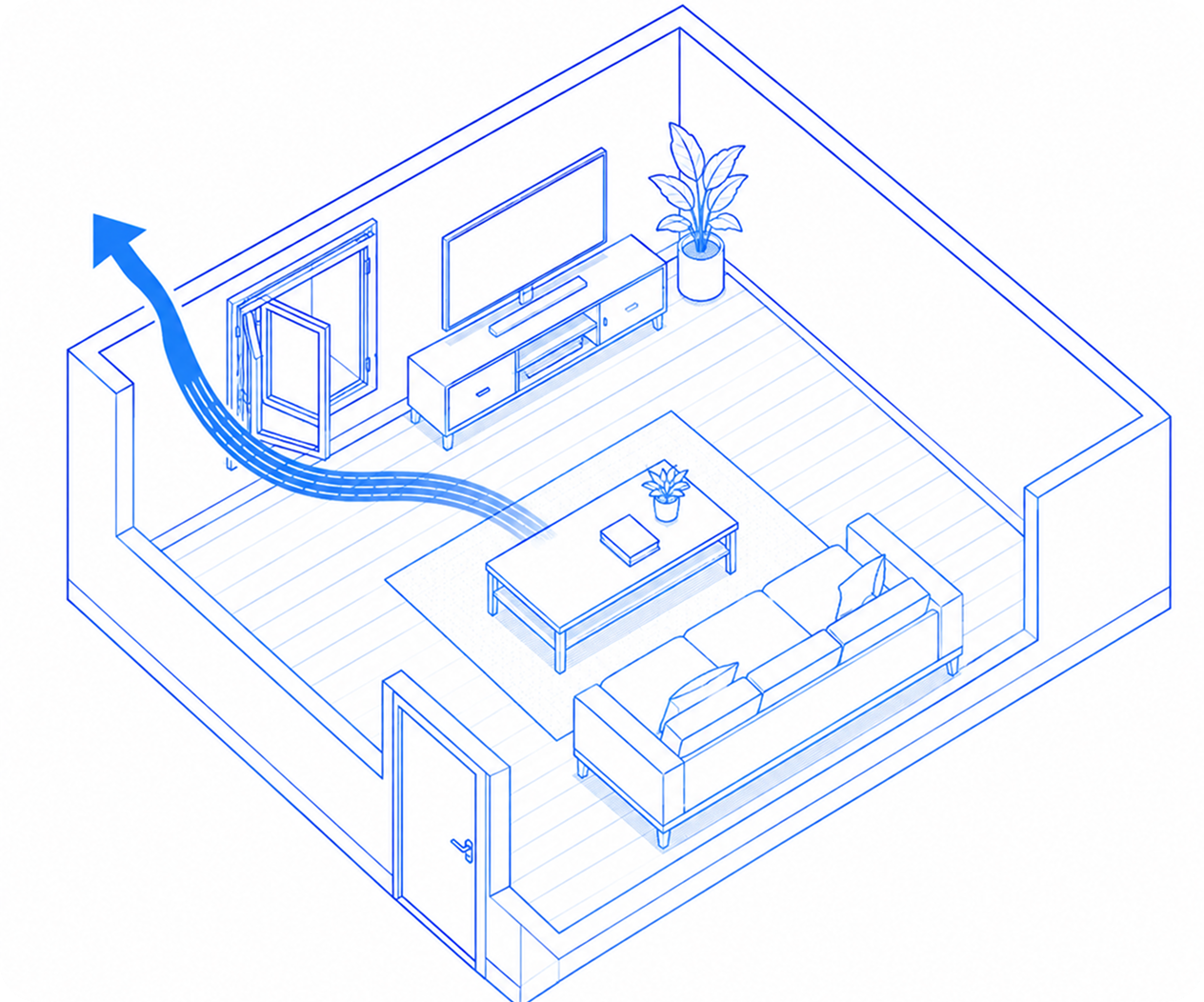
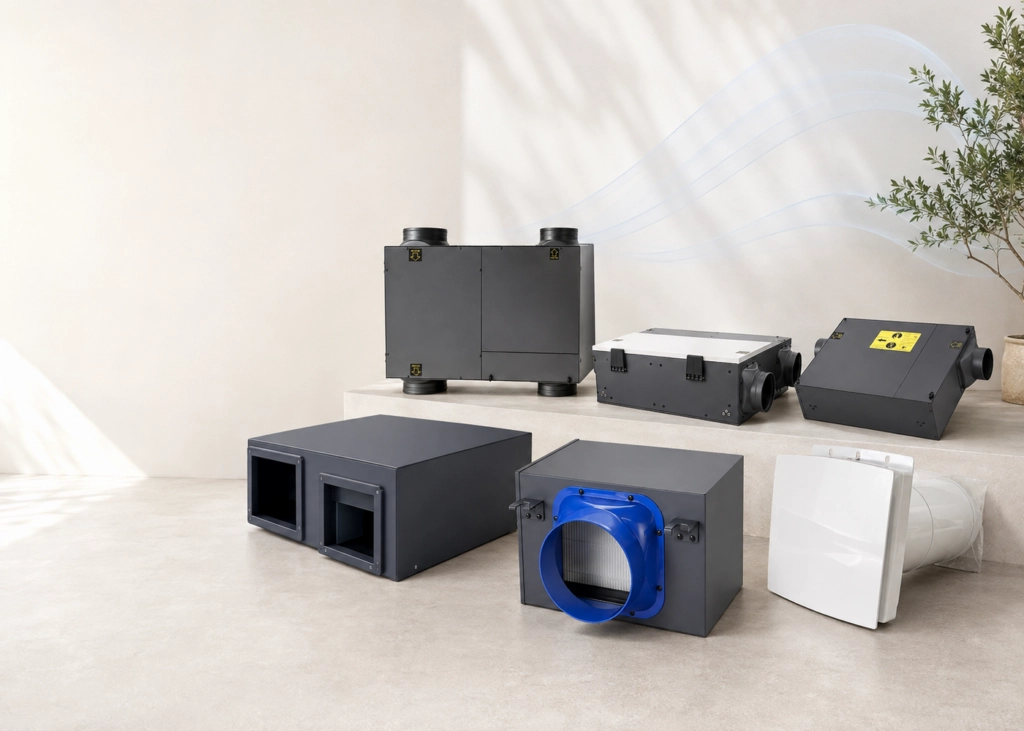
Windows that are opened close to each other often create only limited air movement, leaving many areas of the room poorly ventilated. A clear airflow path across the room is much more effective because it allows air to circulate through every corner before leaving the building. For even better results, natural ventilation can be combined with Amaryllis Fresh Air Fans and Exhaust Fans to maintain continuous airflow regardless of outdoor weather conditions.
Good Practice Open two windows on opposite or diagonal walls to create a continuous airflow path across the room. Fresh air enters through one window while stale air exits through the other, providing efficient natural ventilation.
Poor Practice Opening two windows on the same wall or very close together creates only a short airflow loop. Fresh air does not circulate through the entire room, making ventilation less effective and allowing stale air to remain indoors.
3. Install Exhaust Fans in Key Areas
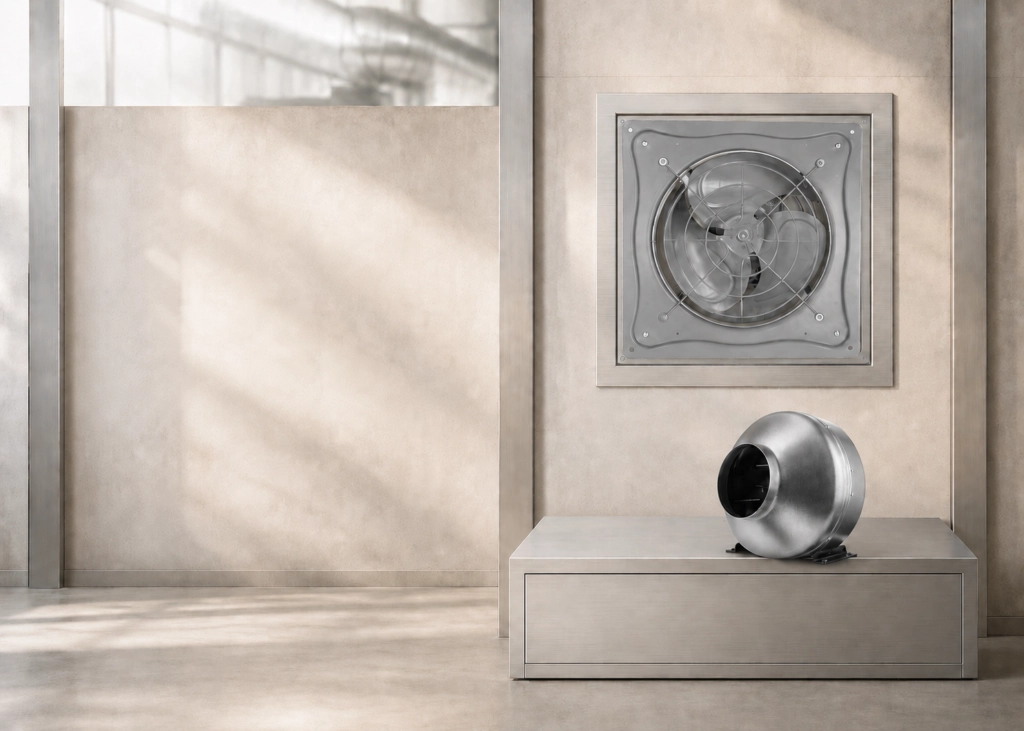
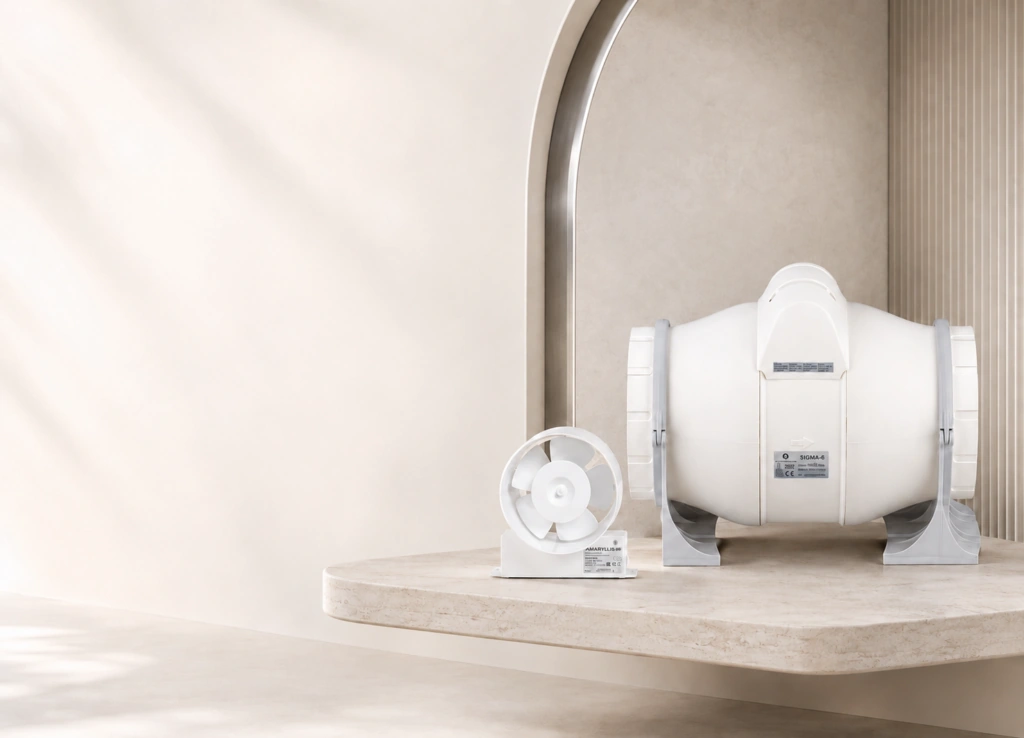
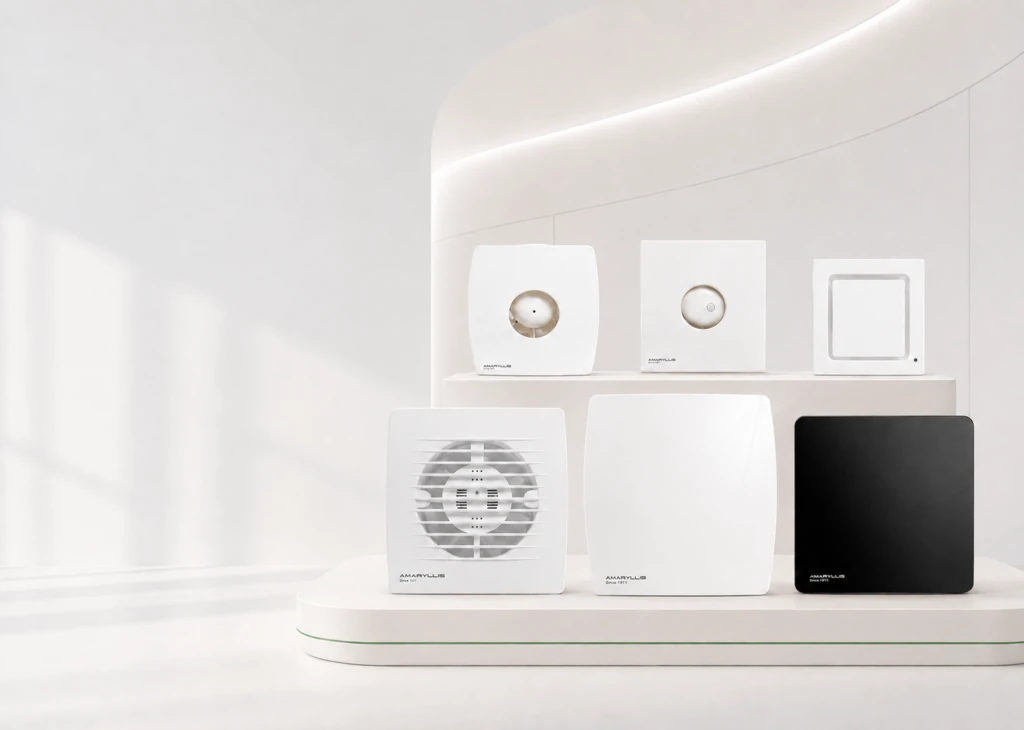
Use high-quality exhaust fans in kitchens, bathrooms, utility rooms, and other moisture-prone spaces. They quickly remove smoke, steam, odors, and excess humidity, helping maintain fresh and comfortable indoor air.
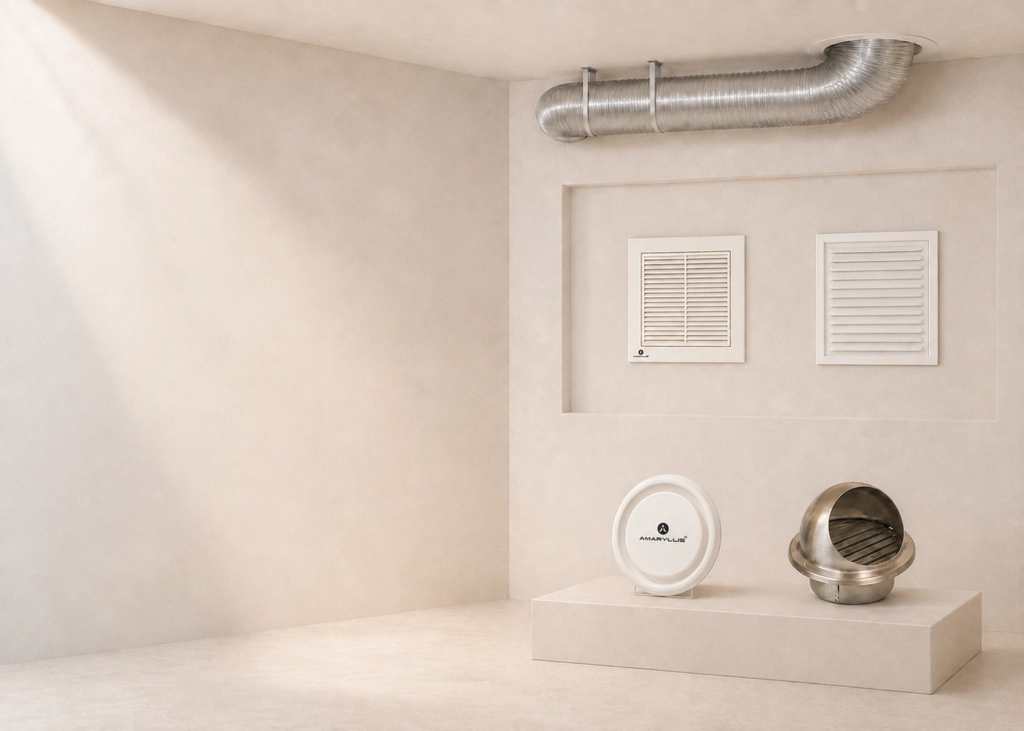
Explore Amaryllis ventilation accessories, including air diffusers, grilles and flexible pipes, for effective distribution, protection and duct connection.
Explore Amaryllis multipurpose exhaust fans for bathrooms, utility rooms and everyday spaces featuring quiet operation, efficient airflow and modern designs.