Inline Fans for Efficient Air Transfer
Long or concealed duct systems can reduce airflow before it reaches the required space. An inline fan supports efficient air movement through ductwork, helping maintain consistent ventilation without placing a visible fan inside the room.
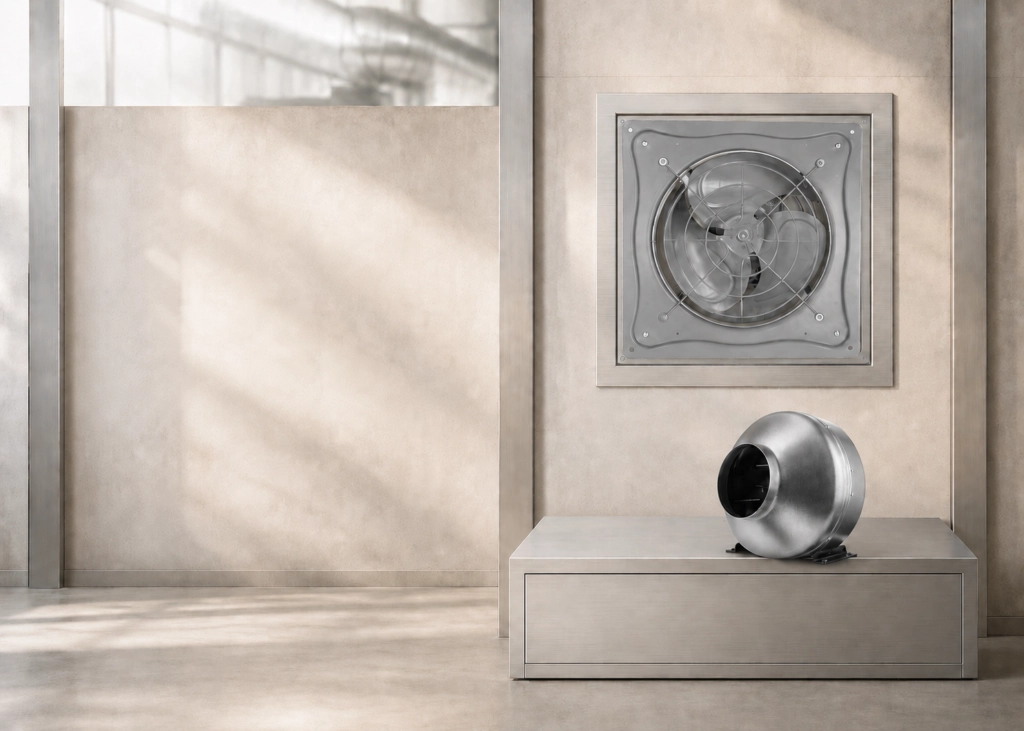
Amaryllis inline fans combine strong airflow, high static pressure and quiet operation in compact, easy to install designs. The range is suitable for transferring hot or cold air through residential and commercial ducting systems.
Why Choose an Inline Fan?
Inline fans help:
- Move air efficiently through ductwork
- Support hot and cold air transfer
- Maintain airflow against duct resistance
- Reduce visible equipment inside the room
- Provide quieter, concealed ventilation
- Improve air circulation across connected spaces
The right model depends on duct size, duct length, airflow requirement and available installation space.
Sigma: Powerful and Versatile Air Transfer
Sigma is designed for efficient air transfer through ducting systems. Its strong airflow and high static pressure help maintain dependable performance, even where the duct layout creates greater airflow resistance. A long-life ball-bearing motor supports reliable operation, while the compact inline design allows convenient concealed installation.
Key features: Hot and cold air transfer, strong airflow, high static pressure, low-noise operation, easy installation, energy-saving performance, long-life ball-bearing motor and fully copper-wound motor.
Blow: Compact Performance for Smaller Ducts
Blow is a compact inline solution designed specifically for smaller ducting systems. It delivers strong airflow and high static pressure while occupying minimal installation space. Its quiet, energy-saving motor makes it suitable for applications that require consistent air transfer through compact or concealed ductwork.
Key features: Ideal for small ducting, hot and cold air transfer, strong airflow, high static pressure, low-noise operation, easy installation, long-life ball-bearing motor and fully copper-wound motor.
How to Choose the Right Inline Fan
Consider these factors before selecting a model:
- Duct size: Choose a fan compatible with the diameter of the ducting system.
- Duct length: Longer ducts may require greater airflow and static pressure.
- Duct layout: Bends, filters and grilles can increase airflow resistance.
- Required airflow: Select capacity according to the space and ventilation requirement.
- Noise level: Low-noise models are preferable near regularly occupied spaces.
- Installation access: Ensure sufficient space for fitting, inspection and maintenance.
Frequently Asked Questions
What is an inline fan?
An inline fan is installed within a ducting system to move air between connected spaces. It supports concealed ventilation without requiring the main fan unit to remain visible inside the room.
What is static pressure in an inline fan?
Static pressure is the fan’s ability to move air against resistance created by long ducts, bends, filters and grilles. Higher static pressure helps maintain airflow in more demanding duct layouts.
Can inline fans transfer both hot and cold air?
Yes. Amaryllis Sigma and Blow inline fans are designed to support both hot and cold air transfer through compatible ducting systems.
Which inline fan is suitable for small ducting?
Blow is specifically designed for smaller ducting applications. The correct model and size should be selected according to the duct diameter and required airflow.
Where should an inline fan be installed?
Inline fans are typically installed within ductwork, false ceilings or other concealed service areas. The installation point should remain accessible for inspection and maintenance.
Better Airflow, Built into the Duct
Effective ventilation depends on moving air consistently throughout the complete ducting system. Amaryllis inline fans deliver strong airflow, quiet performance and reliable air transfer in compact, concealed designs.
Explore Amaryllis Inline Fans
Find the right air-transfer solution for your ducting system.